



The WordPress plugin repository offers a wide variety of subscribe plugins – widgets, pop-ups, slide-ins and more.
We’ve tested the majority of these and the truth is that a lot of the free plugins for capturing e-mails look average at best.
But there are a few exceptions…
Things that matter when it comes to Free Subscription Plugins
When a plugin has a free and a pro version, it is easy to understand that the free one will probably lack some functionality. But that doesn’t mean it won’t be 100% enough to get the work done for you.
Another important thing would be the fact that you’ll need some provider to manage your lists and campaigns, which is a paid service most of the time. The plugin builds the form, the provider sends the emails – those are two different jobs and two different bills.
Things that matter:
- User-friendly interface – that’s a huge one. Even if a plugin is rich in functionality and offers all kinds of customizations, if it is not made easy to set up and understand, the average WP user will get frustrated and the plugin will end up deactivated and deleted.
- Responsiveness – most blogs now get more than half of their traffic from phones. If your message blocks the screen or it isn’t displayed well on mobile devices, you will throw away a lot of value. Google also treats intrusive mobile pop-ups as a ranking problem, so a plugin that can’t behave differently on small screens is a liability.
- Control over display – The last thing you want is to annoy your users with a continuously popping up window on every page. Once is enough. Options like triggering, after-closing actions and delays have to be fine-tuned, and you want your plugin to handle this in a smooth and convenient way.
- Types of opt-in messages – You will want an all-in-one solution to display your subscription form in all the ways you want – pop-up, sidebar widgets, slide-ins, notification bars.
- Integrations – Any plugin you choose will have to be configured to work with some of the e-mail marketing platforms. You want to make sure your service is on the list of options to choose from, and that the integration is made easy.
- Tracking – Sure, you can get your tracking with third-party services like Google Analytics, but if you are like me and like to have all your stats within your WordPress dashboard, you will enjoy a cool stats panel showing you the most important stuff you need to know about your campaigns – impressions, conversion rate, etc.
- Design – You want to be aligned with the latest web design practices, or at least to be able to make your pop-ups look connected to your website’s look.
- Consent handling – this one wasn’t on the list when I first wrote this post, and today it’s the one that can actually cost you money. If you collect emails from visitors in the EU or the UK, you need a real consent checkbox and a record of it. More on that further down.
1. Poptin

Poptin is a web-based application that integrates with WordPress perfectly. Once you download the free plugin you’ll have to create a free account. After that, you’ll be redirected to the dashboard to create your first pop-up.
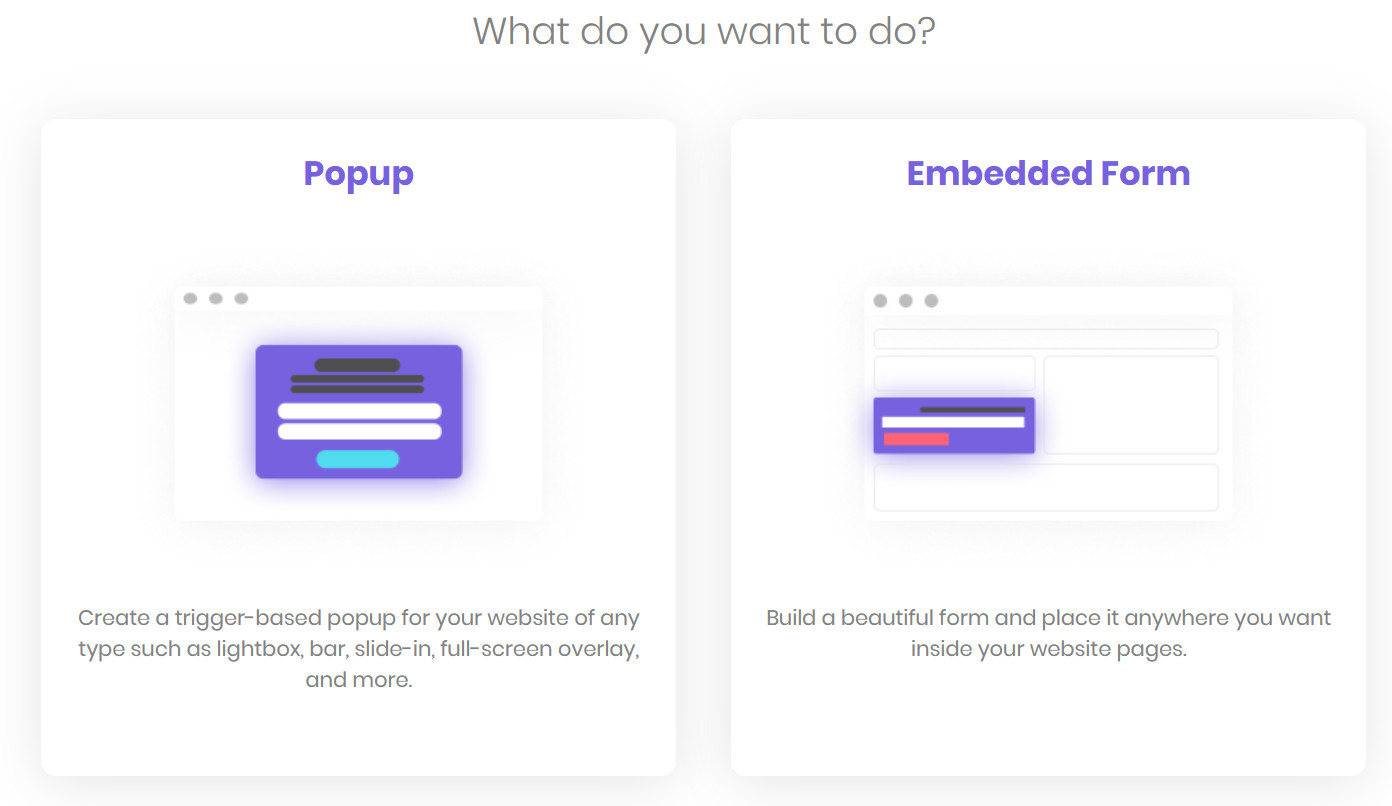
You have two main options to choose from:
- Popup
- Embedded form
Based on your goals the app will show you different templates for your form. You can choose from slide-ins, full-screen popups, notification bars and more.
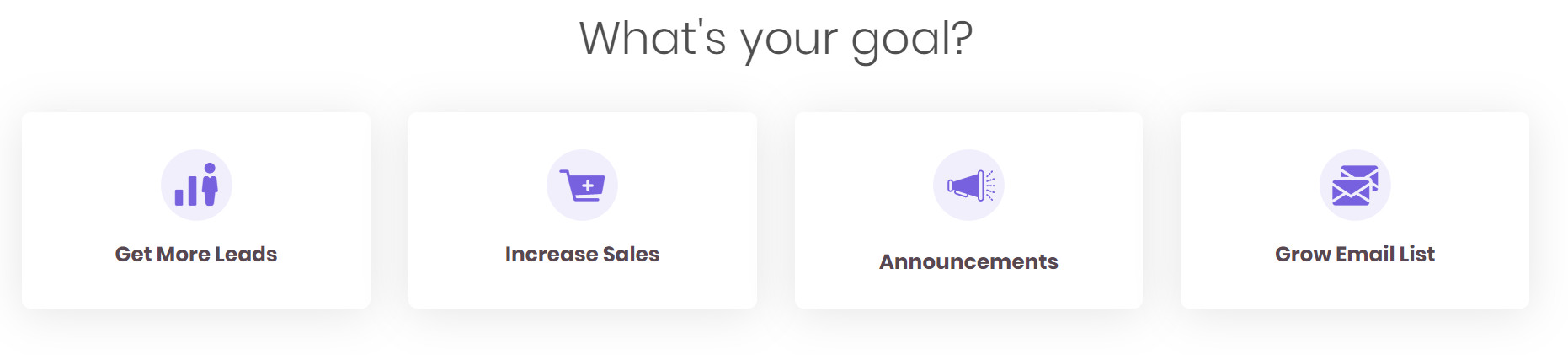
All designs are very modern, using the latest graphic and UI trends.
After you choose your desired template you can customize it in almost every way, see how it will look on mobile devices and add elements like a timer, for example.
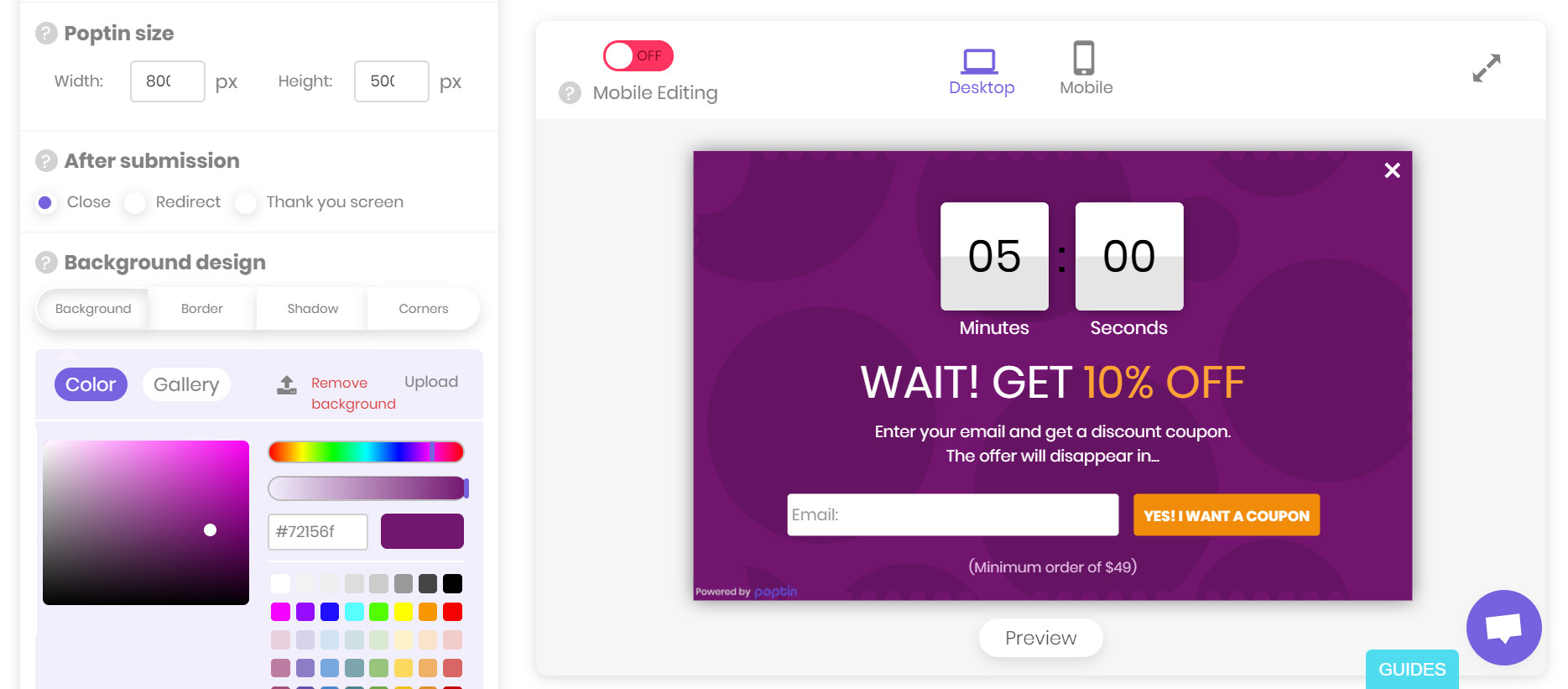
Poptin Integrations
The app integrates with all the major newsletter services. Just pick your favorite service, grab its API key and add it to the form.
One thing to know before you commit: because the editor and the stats live on Poptin’s servers and not in your WordPress install, the free tier is capped by monthly visitors rather than by features. That’s generous enough for a small blog, but check the current limit on their pricing page before you build your whole strategy on it – it’s the kind of number that changes. If your site is already getting serious traffic, one of the fully self-hosted options below will be cheaper in the long run.
2. Hustle (formerly known as WordPress Pop-Up)

Right from the start, the interface grabs your attention and guides you straight to the point. You will create your first pop-up in no time. The dashboard and the whole interface of the plugin are state of the art, which makes launching your campaign an easy and pleasant experience.
The process is separated into 3 main tabs:
- Basic Setup – where you set your e-mail service provider.
- Content & Design – here you choose how your form will look (very customizable and user-friendly).
- Display Settings – the position and type of your form, where you want it to appear, how to trigger it, when to hide it. Everything made easy and effective.
You have full control of the look and feel of your forms. Fields are easy to set up and all colors are customizable from a simple, user-friendly visual editor. Hustle offers several layouts to play with and a set of pre-made color palettes, which are all fully customizable.

Hustle is made by WPMU DEV, it sits at around 90,000 active installs and it’s still being updated regularly – which matters more than it sounds. Half the “best free plugin” lists on the web are still recommending pop-up plugins that were abandoned years ago.
3. MailPoet
This one wasn’t in the original version of this post, and it deserves to be here now. MailPoet is the odd one out in this list because it isn’t just a form plugin – it’s the form and the sending service in one, with around 500,000 active installs behind it.
That solves the problem I mentioned at the top: normally you need a plugin to capture the email and a separate paid provider to actually send anything. With MailPoet you build the subscription form, manage the list and send the newsletter without ever leaving your WordPress dashboard. The free plan covers a decent-sized list, and their own sending service starts costing money only once you grow.
Why you’d pick it: you want the whole thing in one place and you don’t want to learn Mailchimp.
Why you wouldn’t: the form types are simpler than what Poptin or Hustle give you. No fancy full-screen takeovers or exit-intent triggers on the free plan.
4. Popup Maker
The most installed plugin on this list by a wide margin – roughly 700,000 active installs – and the one I’d hand to someone who wants control more than they want templates.
Popup Maker doesn’t try to be pretty out of the box. What it gives you instead is a genuinely deep set of triggers and conditions in the free version: open on click, on scroll depth, after X seconds, on exit intent, only on certain post types, only for logged-out users, only once per visitor. If you have ever been annoyed by a plugin that won’t let you say “show this on blog posts but never on the checkout page”, this is the fix.
You drop any form inside it – a MailPoet form, a Fluent Forms form, a Mailchimp embed – and Popup Maker handles the when and where. Think of it as the display engine rather than the form builder.
WPCtrl Best Choice: if I had to keep only one plugin from this list, it’s this one. It’s free, it’s maintained, it doesn’t phone home to an external dashboard, and it pairs with whatever email service you already use.
5. Icegram Engage
Smaller than the rest at around 10,000 active installs, but worth a look if you like the “message types” approach – Icegram splits everything into action bars, messengers, toasts and pop-ups, and lets you run several at once with different targeting.
It’s the closest thing on this list to the old-school notification bar done well, and the free version doesn’t cripple the targeting. Worth testing if Popup Maker feels too bare and Poptin feels too external.
Before you collect a single email: the consent part
When this post was first written, you could slap a form in your sidebar and start collecting. That’s not the case anymore, and it’s the biggest change to this topic in years.
If any of your visitors are in the EU or the UK, GDPR applies to you regardless of where your server is. In practice that means three things:
- Ask, don’t assume. An unchecked consent box that the visitor ticks themselves. Pre-ticked boxes don’t count as consent, and neither does “by subscribing you agree to…”.
- Say what they’re signing up for and link to your privacy policy right there in the form. “Weekly WordPress tips, no spam, unsubscribe anytime” is enough – it just has to be honest.
- Keep the proof. You need to be able to show when and how someone opted in. All the plugins above store the submission; make sure the consent checkbox is part of what gets stored.
Turning on double opt-in handles most of this for you and it has a selfish benefit too – it kills the fake and mistyped addresses that quietly wreck your deliverability. A list of 400 people who confirmed is worth far more than a list of 1,000 where a third of the addresses bounce.
Final Words
Don’t forget that the subscription form is just the tip of the iceberg. Before you start capturing visitors’ emails you should develop a strategy and offer some kind of value right off the bat. Nobody joins a list because there’s a box on the page – they join because you promised something worth having.
Done in a professional way, though, it becomes a powerful marketing tool, which you totally need to implement on your website to increase your engagement, conversions or whatever you’re aiming for.
One last thing worth saying out loud: an email list is the only audience you actually own. Social platforms change their rules, Google changes its algorithm, but the addresses in your list keep working. That’s why this is worth doing properly even if it takes you an afternoon.
The awesome free pic for this article is from: thehungryjpeg.com
Disclosure: Some of the links on the page may contain a ref code (affiliate links), that tells the other side that we have sent you. If you liked what we suggest and you make a purchase, we may receive a commission.
